
We got a night of sleep. It was eight hours. Our eating habits are still the same — we have not made any changes to the food we eat. We’re doing everything “right.” And yet — we’re exhausted, our jeans feel tighter, and we cried in the car this morning without knowing why.
Sound familiar?
Most of us chalk it up to stress. Busy schedule. Getting older. We push through and hope it passes.
But here’s the thing — our body doesn’t send these signals for no reason. If something keeps feeling stubbornly “off,” there is probably an underlying reason why. Most of the time, it will turn out to be our hormones.
Hormonal imbalance harmony is not just another buzzword from the world of health. It is what keeps our entire system functioning and gives us the energy to keep moving every day. We don’t have to be a genius to understand that when the system works fine, everything is okay; but when it does not, it is impossible to keep up.
What our body may be telling us.
First — What Does “Hormonal Imbalance” Actually Mean?
Our hormones are chemical messengers. They’re produced by glands — our thyroid, adrenal glands, ovaries, testes, pancreas — and they travel through our blood telling every organ and tissue what to do and when to do it.
Our body makes over 50 different hormones. Each one has a job. And when any one of those hormones is out of whack, whether up or down, we can tell — even though they are not necessarily related to “hormones” at all.
A simple example of how to think about hormones is to view them as being akin to an orchestra. If every instrument in the orchestra is not in tune and playing in time, the entire performance will be marred.
This is precisely how it works in our body.
Common Signs and Symptoms of Hormonal Imbalance
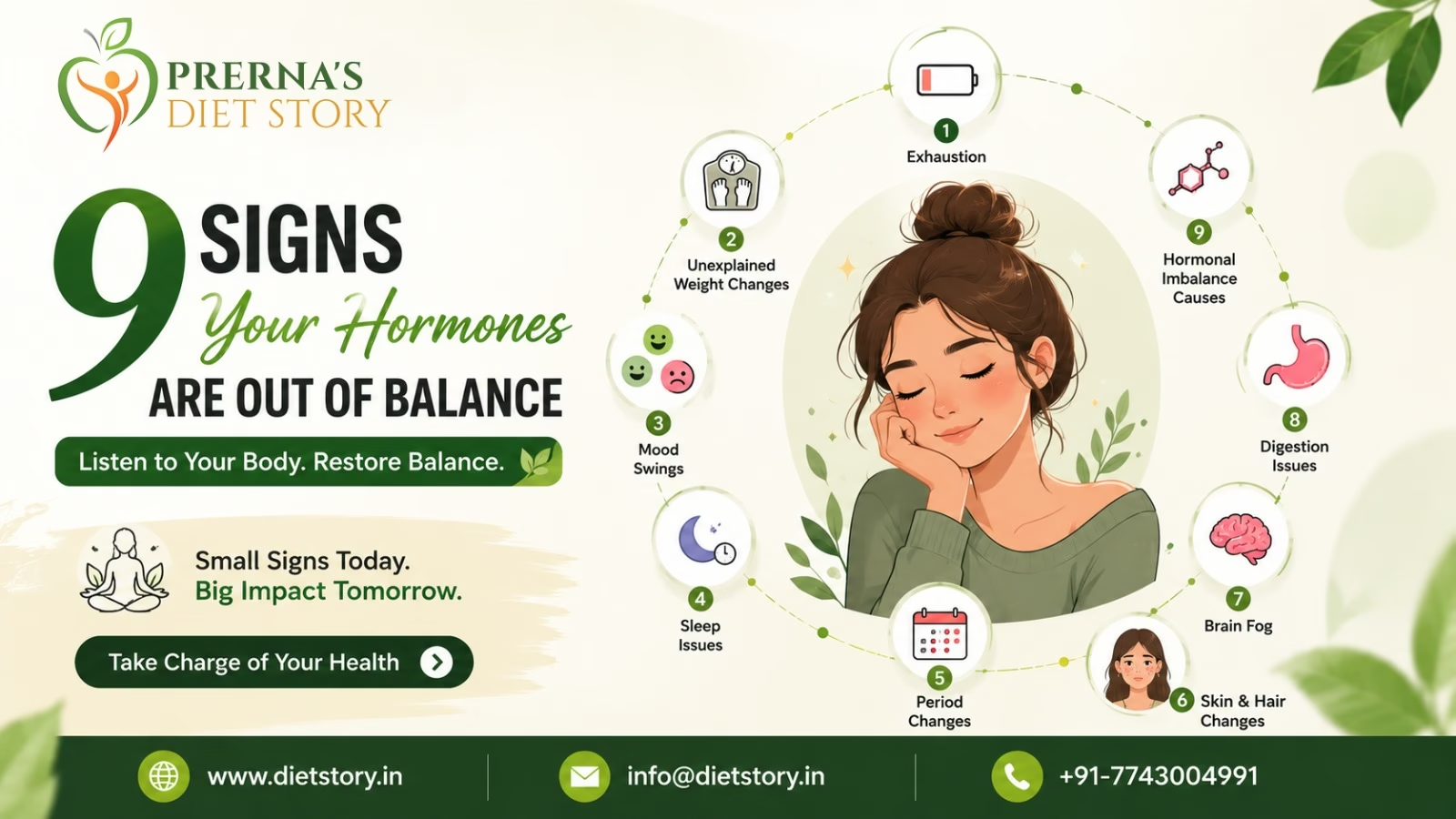
1. We’re Exhausted — Even After a Full Night’s Sleep
Not “we need some coffee” tired. We’re talking about being tired so badly that we can’t explain why. Tired to the point where we sleep for eight hours and yet we feel as if we have slept for an hour or two.
This is a very common problem that is complained about by those who are facing hormonal imbalance issues, but it’s also one of the problems that is overlooked. Doctors tend to disregard the issue. Friends try to make us drink more water. But this type of fatigue doesn’t improve with rest since it wasn’t caused by lack of sleep.
When there is a lack of certain hormones in our thyroid, our metabolism becomes much slower. When cortisol levels are not functioning properly it reduces the quality of sleep. So, if our stress hormone – cortisol – is out of whack because of long periods of stress, this takes its toll on our energy levels which can’t be restored with sleep.
If we’re depending on caffeine and yet we’re feeling very fatigued, our hormones should be checked.
Our body is saying: “We are not lazy. It’s our chemical balance. We need help – not sleep.”
2. Our Weight Is Changing and We Can’t Figure Out Why
Our diet hasn’t changed. We’re still taking those walks every day. Yet the weight continues to climb – particularly in our midsection.
One of the most difficult situations that we may experience is right here. It’s obvious why it’s so difficult. We’re doing everything right and our body is not responding. This is because the problem is not our nutrition, but how our hormones direct the way our body uses its energy.
When our thyroid is under-active, it will slow down our metabolism without our notice for months. Excess levels of cortisol, triggered by chronic stress, tell our body to store fat, mostly in the abdominal area. If we have problems with insulin resistance, even if we eat properly, it’s not going to help us lose weight.
This is not an issue of lack of motivation. And we did nothing wrong.
What our body is saying: “We’re having trouble processing energy. Look into what’s controlling our energy processes and don’t focus on counting calories only.”
3. Our Mood Feels Completely Unpredictable
Today, everything is normal. The next day, we’re crying over something tiny, or we’re inexplicably snappy with people we care about.
Emotional volatility is one of the most upsetting symptoms of hormone imbalance, and one of the least understood. It’s dismissed as a matter of personality, or a product of stress, or just “sensitivity.” But the reality is usually much more physical.
Estrogen helps control serotonin, the neurotransmitter responsible for maintaining our mood and helping us stay emotionally resilient. When estrogen levels fluctuate, so does our serotonin.
That’s why so many women experience a correlation between mood shifts and their menstrual cycle, or notice that their moods change significantly as they reach perimenopause.
Anxiety or depression that occurs without an apparent external cause? It’s not a weakness. It’s likely hormone-related, and should be treated as such.
What our body is telling us: “Our neurotransmitters are fluctuating with our hormones. We need professional help.”
4. We Can’t Sleep — Or We Can’t Stay Asleep
We lie down, and our thoughts whirl about in circles. We sleep well enough, but then we wake up in the middle of the night and stare up at the ceiling. Our hot flashes make it impossible for us to reach the REM phase of sleep.
Sleep and hormonal balance are highly interrelated. While cortisol should normally decrease during nighttime hours and give our body time to rest, it stays high in chronically stressed people and makes our nervous system overactive. Progesterone serves as a sedative, which means that when it decreases, we become anxious and unable to sleep. The same applies to melatonin – the hormone regulating the sleep cycle.
And the vicious circle goes on, because bad sleep also affects the levels of cortisol and insulin, thus worsening our hormonal balance even more. One night without proper sleep won’t hurt us. Months of it mean that our body requires help.
What our body is telling us: “We can’t regulate our own sleep cycle anymore. We need help with our sleep hormones.”
5. Our Period Has Become Unpredictable, Heavy, or Painful
The menstrual cycle is perhaps the clearest indicator of female hormonal balance. Any changes in its regularity – from sudden lightness or heaviness to increased pain levels, or its irregular appearance – are likely to indicate that something has happened.
Our cycle can be viewed as the monthly report card on our reproductive hormone balance. Both estrogen and progesterone take part in regulating the cycle; any disturbance in the levels of one of them influences it directly. PCOS, thyroid disorder, and perimenopause are some of the most frequent disorders related to menstrual cycle changes. An abnormally heavy or painful period, for example, often indicates high levels of estrogen and/or low levels of progesterone.
Important note: sometimes menstrual cycle changes might be not only caused by hormonal imbalance but also by such disorders as fibroids or polyps, which makes consultation with a healthcare professional a must-do.
What our body is trying to say: “Something is wrong with our reproductive hormones, their level or balance.”
6. Our Skin and Hair Are Sending Us Messages
Acne breaking out on our jaw and chin in our 30s or 40s? Hair thinning around our temples or top of our head? Darker or more prominent hairs growing on our face or chin?
This is not some coincidence; our skin and hair are actually hormonally sensitive and will sometimes signal changes before any other signs do. Acne that appears on our jaw line prior to menstruation is usually an indication of high androgens (male hormones). Hair loss generally indicates thyroid dysfunction or low estrogen. Excessive growth of hair on our face or chin is usually an indicator of high testosterone.
Skin changes such as dryness, lack of elasticity, and darkening of the skin under our neck and armpits indicate changes in estrogen and progesterone.
Our mirror doesn’t just reveal how our skin looks but is revealing what is going on with our hormones.
What our body is trying to tell us: “What we see on the outside is telling us what’s going on inside.”
7. We Feel Foggy, Forgetful, and Mentally Slow
We used to be quick-witted, but now we’re going through the same e-mail for the third time without taking anything in. We forget words in the middle of sentences. We enter rooms with absolutely no clue as to why.
Hormonal imbalance is a real problem and brain fog is a subtle but serious symptom that it causes. Estrogen, thyroid hormones, and cortisol levels all influence how well our brain is working – our ability to remember things, concentrate, think clearly.
It happens frequently during perimenopause but may occur in anybody suffering from any sort of thyroid problem or adrenal fatigue. It’s always blamed on being stressed or old but in many cases it can be treated just because there’s a very precise hormonal reason.
What does our body want to tell us? “We don’t have what we need. This is a hormone problem, not our mind going nuts.”
8. Our Digestion Is Off — And It Tracks With Our Stress or Cycle
This one really shocks people. Most of us don’t realize that bloating, constipation, and irregular bowel movements have anything to do with our hormones. However, the relationship between the gut and the endocrine system is quite tight.
Estrogen and progesterone hormones affect the work of the gastrointestinal tract in a direct way. Many women experience digestive issues that regularly flare up at certain moments of their menstrual cycle. The cortisol hormone is also involved — constant stress decreases digestive activity, causes disruption in bowel movement and changes in the gut microbiome which might start showing signs after months of negative impact.
When we experience digestive irregularities and we’ve ruled out all possible factors causing it – maybe our hormones are behind it.
What our body says: “There is dialogue going on between our gut and our hormones. Whenever there are problems with one of them – another one signals it.”
Root Causes: Why Do Our Hormones Get Out of Balance?
Knowing the signs is only half the picture. Understanding why this happens helps us address the real problem — not just manage symptoms.
Chronic stress is perhaps the problem we have today. When we are under stress for a time it keeps our cortisol levels high. When cortisol is high it can really mess up the production of some important hormones, like estrogen and progesterone and also thyroid hormones and testosterone over time.
Poor diet and nutrient deficiencies affect the raw materials that our body needs to make hormones. Things like sugar, foods that are not natural and oils that cause inflammation are all part of the problem. Our body uses these materials to manufacture hormones and when we eat too much sugar, processed foods and inflammatory oils it can impair the raw materials our body needs.
Not enough sleep is underestimated. Sleep is when our body regulates cortisol, repairs hormonal pathways, and resets. Consistently cutting it short creates a compounding cascade of imbalances.
Too much exercise — or too little — both affect cortisol and reproductive hormones. Overtraining, particularly in women, can suppress estrogen and stop periods entirely.
Thyroid dysfunction — whether the thyroid is underactive or overactive — affects metabolism, mood, energy, and nearly every organ system.
PCOS is one of the most common hormonal conditions in women of reproductive age, involving elevated androgens, irregular cycles, and often insulin resistance.
Perimenopause and menopause bring natural but dramatic hormonal transitions that affect virtually every system in the body, often starting years before periods actually stop.
Environmental toxins — Some things like plastics and pesticides have something in them called disruptors. These endocrine disruptors are also found in fragrances and personal care products. The thing about these disruptors is that they can act like hormones in our body or they can block the hormones that are already there. This can really mess up the way our body is supposed to work.
Body weight significantly above or below a healthy range both affects how hormones are produced and metabolized, since fat tissue itself is hormonally active.
Diagnosis: How Do We Actually Know If Our Hormones Are Off?
If we have been feeling these symptoms for a time — like more than a few weeks — we should go see a doctor to find out what is going on.
We should talk to a doctor who knows a lot about women’s health like a gynaecologist, or a doctor who knows about hormones like an endocrinologist, or a general doctor who looks at the full picture of our hormonal health.
When we go to the doctor we should not make our symptoms sound less bad than they are. We should write down all of our symptoms before we go. Be very specific about what has changed and when it changed.
Then the doctor will probably do a lot of blood tests to check our hormone levels like FSH, LH, estrogen, progesterone, testosterone, thyroid hormones — which are TSH, T3 and T4 — cortisol and fasting insulin. Together, these give a detailed picture of where things stand.
A physical examination can reveal clinical signs — patterns of hair loss, skin changes, weight distribution — that support the picture the bloodwork is painting.
Our full history matters too. Cycle patterns, stress levels, sleep quality, recent life changes, and how long symptoms have been present are all valuable diagnostic information that no blood test alone can provide.
The key point: no single test tells the whole story. A thoughtful combination of bloodwork, physical examination, and detailed symptom history is the most reliable path to answers.
Management: What Can Actually Be Done About It?
The good news is that hormonal imbalances are rarely permanent, and most people see significant improvement with the right support. Treatment is always specific to which hormones are affected and what’s driving the imbalance.
Start with lifestyle. It sounds basic, but it’s genuinely powerful. Managing chronic stress — through therapy, breathwork, boundaries, or whatever actually works for us — directly lowers cortisol. Prioritizing sleep protects every hormonal system in our body. Eating whole foods with enough healthy fats and protein gives our body the building blocks it needs to make hormones properly. And finding an exercise rhythm that challenges us without overtaxing us is a key piece of the puzzle.
Medical treatment may be necessary and shouldn’t be feared. Thyroid medication can be life-changing for people with thyroid dysfunction. Metformin helps with insulin resistance. Hormonal contraceptives are sometimes used to regulate cycles. Hormone replacement therapy (HRT) for perimenopause and menopause has significant evidence behind it when started appropriately and is far safer than its old reputation suggested.
Targeted supplementation can support the process. Magnesium, vitamin D, omega-3 fatty acids, and adaptogenic herbs like ashwagandha are commonly used to support adrenal function and overall hormonal imbalance health. These work best alongside, not instead of, medical care.
Reducing our toxic load is a slower but meaningful step. Switching to glass or stainless steel food storage, choosing fragrance-free or natural personal care products, and reducing ultra-processed food all help lower our exposure to endocrine-disrupting chemicals over time.
The Bottom Line
Our body is always communicating with us. Fatigue that won’t lift, loose weight that won’t budge, moods that come out of nowhere, sleep that doesn’t restore us — these aren’t things we just have to live with. They are our body asking, clearly and persistently, for help.
Hormone balance isn’t a luxury wellness goal. It’s a basic requirement for feeling well in our own skin. And the genuinely reassuring thing is this: once we understand what’s actually going on, most hormonal imbalances respond well to the right combination of lifestyle changes, medical support, and time.
If something has felt off and we’ve been dismissing it — stop dismissing it. Trust what our body is telling us. Book the appointment. Ask for the panel. We deserve to feel like ourselves again.
Book a Consultation with Diet Story →
If you’d like a personalised plan tailored to your blood reports, food preferences, and lifestyle, book a consultation with Dt. Prerna Dhingra at Diet Story, Gurugram.
📞 +91-7743004991 📧 info@dietstory.in 📍 Gurugram, Haryana
FAQ
1. How do we know if our symptoms are caused by a hormonal imbalance?
Some of the various manifestations of hormonal imbalance include persistent fatigue, unexpected weight gain, menstrual irregularities, irritability, acne, hair loss, insomnia, and brain fog. While these can be caused by other conditions as well, the most reliable method of knowing for sure is by consulting a health practitioner. They will then advise us on blood work and physical examination.
2. Can hormones cause weight gain even if we’re eating healthy?
Indeed, hormones including thyroid hormones, insulin, cortisol, estrogen, and progesterone affect the way our body accumulates fat and utilizes energy. In cases where the hormone levels are unbalanced, weight loss can be challenging even when we eat balanced meals and exercise.
3. Which doctor should we consult for hormonal imbalance?
A general practitioner could be a good point to begin our search for a doctor. Our general practitioner could refer us to an endocrinologist, which is a hormone specialist, or to a gynecologist if we have problems related to menstruation, fertility, or menopause.
4. What tests are commonly done to check hormone levels?
Based on our signs, the following tests may be recommended by our physician: TSH, T3, T4 (thyroid tests); estrogen; progesterone; testosterone; follicle stimulating hormone (FSH) and luteinizing hormone (LH); cortisol; fasting insulin; blood glucose. Different people need different tests done.
5. Can stress really affect our hormones?
Yes. Prolonged exposure to stress can raise the level of cortisol, which is the main hormone that triggers stress. Increased levels of this hormone for prolonged periods may affect our sleep cycle, metabolism, reproductive hormones, thyroid gland, and blood sugar regulation.
6. Can lifestyle changes improve hormonal balance naturally?
Often, in most cases, yes. A healthy diet, sufficient sleep, stress management, regular exercise without overtraining, and maintaining our weight will help to have normal hormones. In other cases, like in thyroid or PCOS conditions, medical treatment is needed.
7. Is hormonal imbalance only a women’s health issue?
Not at all. Hormonal imbalance affects both males and females. In the case of women, hormonal changes are observed through periods, pregnancy, and menopause, whereas for men, some of the signs of hormonal imbalance include low energy, loss of muscle mass, low libido, mood swings, and low testosterone levels.
8. Can hormonal imbalance be treated?
Yes. Most cases of hormonal imbalance can be handled easily once the root cause is discovered. The solution might involve lifestyle changes, use of medicines, hormone treatment, or even treatment of some other diseases like thyroid problems or PCOS.






Leave a comment