
In my clinic, cholesterol reports are one of the most common reasons Delhi-NCR clients walk in — often after a routine check-up throws up a surprise LDL number. The good news I tell every client: medication isn’t always the first step. In most mild-to-moderate cases, the right dietary changes — done consistently for 6-8 weeks — move the numbers meaningfully before we even discuss drugs with your physician. What I’ve noticed working with Indian families specifically: generic “heart healthy diet” advice from Western sources doesn’t stick, because it ignores ghee, dal, sabzi, and festive eating. Below is exactly how I guide my own clients — what to change, what to keep, and why.
The following guide will give you insight into what cholesterol is, why your levels are important, and what modifications you need to make at your next meal.
Managing Cholesterol levels on an Indian Diet — A Special Note for Punjab Readers
If you have been brought up in Punjab, you already understand the importance of food in the daily routine – the yummy curries, the delicious dal makhani, the liberal use of ghee, and even the sweets. All this food is part of culture, of the family, of celebrations, and there is no need for you to give up on this food.
However, if the levels of your cholesterol are worrying you, then some clever modifications in your everyday food can make all the difference. Controlling cholesterol in the Indian diet scenario is very different from managing cholesterol in a general Western heart healthy diet. The key here lies in personalizing your efforts.
Ms. Prerna Dhingra at Diet Story specializes in exactly this — one-on-one online diet consultations for cholesterol management using customized, sustainable Indian meal plans. No bland food. No guesswork.
👉 Book Your Personalized Cholesterol Diet Plan →
What Is Cholesterol and Why Does It Matter for Heart Health?
It is an oily, fatty material that the liver creates on its own in the body. In addition, it is found in animal products that one eats. Cholesterol is something that the body requires because it is needed to develop the walls of the cells and hormones. Cholesterol, as such, is not the issue; rather, the issue lies in having too much of the wrong kind in your blood.
Cholesterol moves around in your body via lipoproteins which are fats bound to proteins. Two main types that you need to know are LDL and HDL.
Healthy Cholesterol Level Values (Ranges for Adults in mg/dL)
It becomes much simpler to chart your progress when you understand your own numbers. This is the range that many physicians strive for in healthy adults:
| Cholesterol Type | Optimal | Borderline High | High / Risk |
| Total Cholesterol | Below 200 mg/dL | 200–239 mg/dL | 240 mg/dL and above |
| LDL (“Bad”) Cholesterol | Below 100 mg/dL | 130–159 mg/dL | 160 mg/dL and above |
| HDL (“Good”) Cholesterol | 60 mg/dL or above | 41–59 mg/dL | Below 40 (men) / Below 50 (women) |
| Triglycerides | Below 150 mg/dL | 150–199 mg/dL | 200 mg/dL and above |
These ranges may vary according to age, pre-existing health conditions, and individual risk factors. Always discuss your specific numbers with your doctor rather than relying on general charts alone.
LDL vs. HDL Cholesterol levels : What’s the Real Difference?
Not all cholesterol is created equal. Here is a quick side-by-side comparison that clears up the confusion most people have:
| Feature | LDL (“Bad”) Cholesterol | HDL (“Good”) Cholesterol |
| Full Name | Low-Density Lipoprotein | High-Density Lipoprotein |
| Role in the Body | Carries cholesterol to arteries | Carries cholesterol away from arteries to liver |
| Effect on Heart Risk | High levels increase risk | High levels reduce risk |
| What Raises It | Saturated fats, trans fats, refined sugar | Exercise, healthy fats, quitting smoking |
| What Lowers It | Fiber, plant sterols, healthy fats, exercise | N/A — you want HDL to go UP |
| Target Level | Below 100 mg/dL (optimal) | 60 mg/dL or above (protective) |
Most discussions center on reducing LDL – however, increasing HDL is just as crucial. HDL is responsible for functioning like the garbage collectors who take all extra cholesterol out of your arteries and carry it back to the liver, where it is broken down and flushed out.
The good news is that the same things that reduce your LDL increase your HDL – you do not have two different goals; one set of efforts takes care of both of them.
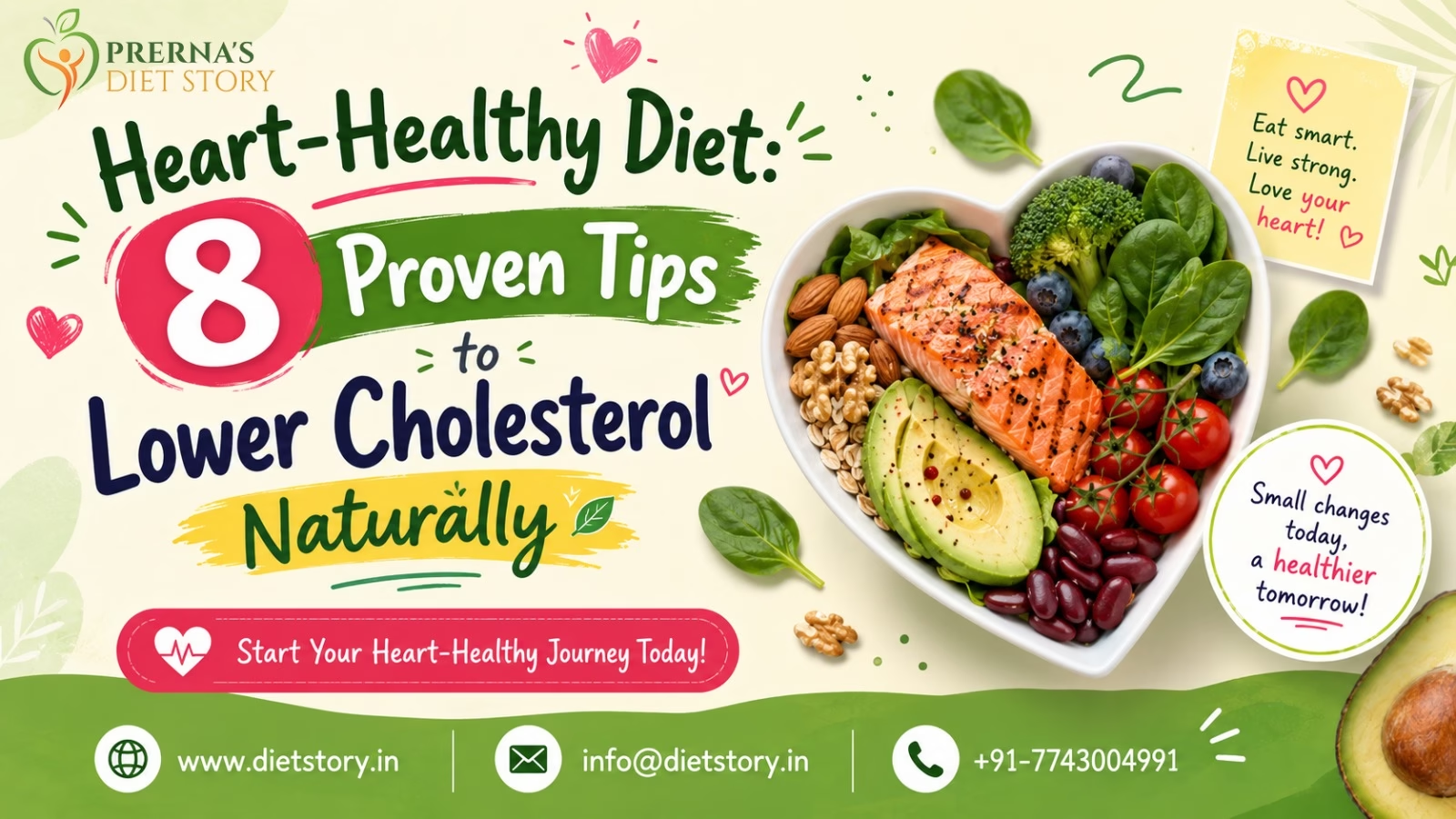
8 Heart-Healthy Diet Tips That Actually Lower Cholesterol Levels
1. Focus on Fiber-Rich Foods Every Single Day — Not Just Occasionally
Soluble fiber is among the most extensively studied ways to decrease LDL cholesterol levels in the natural way. Soluble fiber attaches to the cholesterol molecules in your body and carries them away without ever entering your blood stream.
Best sources of soluble fiber to lower your cholesterol levels:
- Oats and oat bran
- Barley and whole grains
- Beans, lentils, and chickpeas
- Apples, pears, and citrus fruits
- Brussels sprouts and sweet potatoes
Changing from your morning cereals to oatmeal, and white rice to legumes occasionally, will definitely produce some positive results in several months.
2. Choose Heart-Healthy Fats Over Saturated and Trans Fats
Fats do not always increase your cholesterol level. On the contrary, fats play an essential role in decreasing your cholesterol level if they are consumed in the correct way. You need to substitute saturated fats, which are present in red meats, butter, and whole milk, with unsaturated fats.
Best healthy fat sources for heart health:
- Extra virgin olive oil
- Avocados
- Walnuts, almonds, and pistachios
- Fatty fish like salmon and mackerel
- Flaxseeds and chia seeds
One simple change — cooking with olive oil instead of butter — can add up significantly over time.
3. Eat Heart-Healthy Fatty Fish at Least Twice a Week
These foods contain omega-3 fatty acids that reduce triglycerides while moderately increasing levels of HDL cholesterol. However, if fish is not a normal part of one’s diet, then he/she can start by eating a can of sardines as salad or grilling some salmon once per week.
4. Add Plant Sterols and Stanols to Your Diet
These naturally occurring substances, which are present in trace quantities in vegetable oils, nuts, and seeds, actually prevent the body from absorbing any more cholesterol. Some of the foods that now include plant sterols are:
- Certain margarines (look for “plant sterol-enriched”)
- Fortified orange juice
- Some yogurt brands
5. Reduce Refinement and Sugar Intake for Good Cholesterol Management
In addition to increasing blood sugar, excessive sugar and refinement also increase triglyceride levels and decrease HDL. One of the best changes you can implement for managing your cholesterol is to switch from white bread and sweetened beverages to whole grains and fresh fruits.
6. Snack Smart: Choose Nuts Over Processed Options
Consuming a small quantity of unsalted nuts like almonds, walnuts, or pistachios a few days per week can lead to reduced levels of LDL cholesterol as a result of healthy fats and fiber content in nuts. It is important to note that nuts are energy-dense; therefore, the portion to be consumed is crucial.
7. Move Your Body Regularly to Support Healthy Cholesterol Levels
Diet and exercise complement each other. Thirty minutes of exercise a day, on most days — walking certainly qualifies — may be enough to increase your HDL and reduce your triglyceride levels, thereby enhancing the effects of your diet.
8. Watch Portion Sizes, Not Just Food Quality
Eating even those food items that are heart-healthy could also prove harmful to your health if you take them in excess quantities. It is equally important not only to know about the kind of food you consume but also about its quantity.
Ready to Take Control of Your Cholesterol? Start Here.
Managing cholesterol through diet is not complicated — but it does help to have a clear, structured plan. At DietStory, we break down exactly what to eat, when to eat it, and how to make it stick.
👉 Explore Our Cholesterol-Lowering Recipes →
👉 Talk to a Dietitian — Book a Free Consultation →
Practical Resources for Managing Your Cholesterol Levels Long-Term
Beyond diet, these tools and resources can help you stay consistent and track real progress:
| Resource | Why It Helps |
| Regular Lipid Panel Testing | Catch changes early; most adults need testing every 4–6 years, or more often if at risk |
| Registered Dietitian | Personalized cholesterol-lowering meal plans, especially if you have diabetes or other conditions |
| Cardiac Rehab Programs | Structured programs combining nutrition, exercise, and monitoring for heart patients |
| Food Tracking Apps | Two weeks of logging meals often reveals hidden sources of saturated fat you’d never notice otherwise |
| DietStory Blog | Evidence-based diet tips, meal plans, and recipes for heart health — all in one place |
Frequently Asked Questions About Cholesterol Levels and Diet
Can I lower my cholesterol through diet alone, without medication? While for many individuals with mildly elevated cholesterol levels, dietary modifications alone may be enough to see positive results in a matter of months, there is another side to the coin in the form of genetics and certain patients that require drug therapy as well as changes in diet.
How long does it take to see cholesterol changes after improving my diet? People generally experience a noticeable drop in LDL and triglyceride levels after 4 to 12 weeks from the time they start making certain dietary modifications. The extent of their drop depends upon individual cases.
Are eggs bad for cholesterol levels? While eggs have cholesterol in their food content, however, in moderate quantities, consumption of one egg each day by a majority of healthy individuals does not result in increased blood cholesterol levels since eggs do not have the same effect on the body as saturated fats.
Is coffee bad for cholesterol? Unfiltered coffee such as that prepared using a French press or Turkish coffee contains diterpenes which increase LDL cholesterol slightly. Drip coffee that uses filters eliminates most of these compounds and is thus considered safe to consume by most.
Can chronic stress raise cholesterol levels? Yes, but indirectly. Chronic stress is linked with dietary choices, activity levels, and hormonal balances, all of which can result in high cholesterol. Sleep, exercise, and relaxation are important elements of a heart-healthy lifestyle as well.
Do I need to cut out all saturated fat to manage cholesterol? While there is advice regarding keeping saturated fat below 6% of your total energy intake for the day, the idea of cutting out saturated fats from the diet is not recommended. Moderate consumption of these fats from foods like dairy and lean meat is acceptable.
The Bottom Line: Consistent Small Changes Beat Extreme Diets for Cholesterol Management
Cholesterol management is not about discovering the magic foods that can bring your numbers down and creating an impossible diet plan that you cannot keep up beyond week two. It is about making practical, sensible swaps: more fiber, healthier fats, physical activity, and portion control. Little changes, done consistently each day, will always trump big changes.
If you suffer from high cholesterol levels or have a history of heart problems in your family, make sure you also get your regular check-ups and talk to your doctor. Food is a great ally, but only when it becomes part of the bigger picture of your heart health.
🌿Found This Helpful? Here’s Your Next Step.
You’ve learned what to change — now let’s make it easy to actually do it.
At DietStory.in, we share practical, science-backed nutrition guidance built for real people with real lives — not just fitness influencers.
✅ Explore more heart-healthy articles
✅ Get free recipe ideas for managing cholestero
✅ Subscribe to our newsletter for weekly diet tips
If you’d like a personalised plan tailored to your blood reports, food preferences, and lifestyle, book a consultation with Dt. Prerna Dhingra at Diet Story, Gurugram.
👉 Visit DietStory.in →
📞 +91-7743004991 📧 info@dietstory.in 📍 Gurugram, Haryana





Leave a comment