
If you or someone in your family has just been told “your sugar is high,” the first thing that usually happens is panic — followed by a hundred conflicting opinions about the right diabetes diet to follow. Your neighbor swears by bitter gourd juice. Your WhatsApp group is sharing a “miracle” diet chart. Your mother-in-law insists rice is the enemy.
In fact, the truth is much simpler and far more practical than the aforementioned information. A proper diabetic diet does not involve deprivation and denial of all your favorite foods; rather, it requires that you know and follow some basic principles in a consistent manner, which is realistic for your kitchen, your parties, and your family dinners whether you are in Gurgaon, Delhi, or any small village in Haryana.
At Diet Story, this is the exact philosophy Dt. Prerna Dhingra builds every diabetes diet plan around — not restriction for the sake of restriction, but sustainable changes that respect real Indian eating habits.
What Is a Diabetes Diet, Really?
The diabetes diet is just another way of describing the method of eating that ensures your blood sugar remains level, neither rising during meals nor dropping between meals. The diabetes diet does not consist of different foods from those eaten by your family.
Three factors that count the most:
- How much you eat (portion control)
- With what you eat it (fiber, protein, and fat slow absorption of sugar)
- When you eat (regular eating times mean steady sugar levels)
Everything else — including specific foods — is built on top of these three pillars.
The Diabetes Diet Plate Method: The Easiest Way to Build a Meal
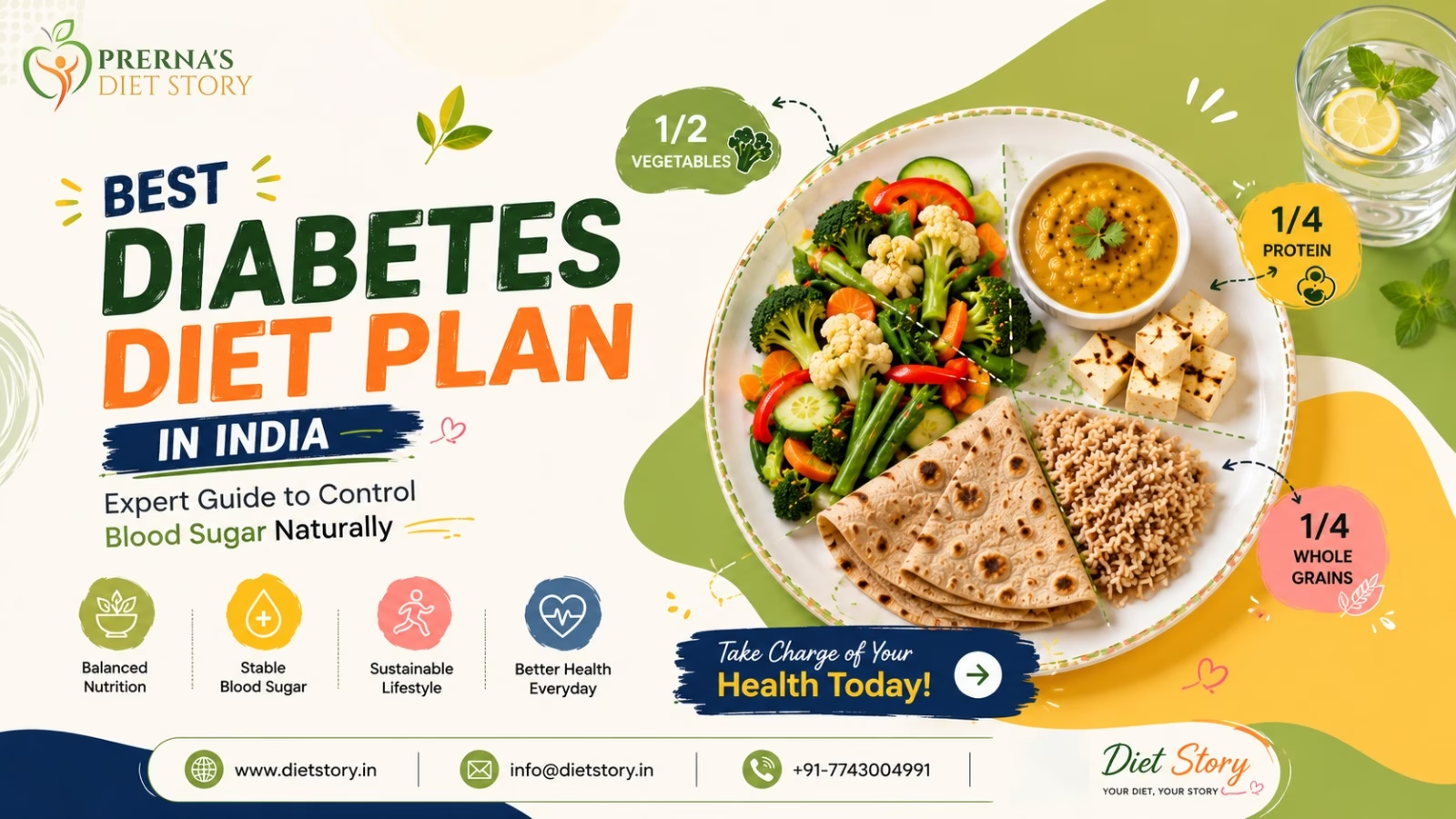
One of the easiest strategies suggested by dieticians all over the world is the diabetes plate strategy. It’s not important to count calories and carbohydrates; it’s better to see what percentage it is.
Thus, you will have the following on the plate for 9-10 inches:
1/2 plate – Non-starchy vegetables (lauki, bhindi, tinda, palak, cabbage, cauliflower)
1/4 plate – Protein (dal, paneer, chicken, fish, eggs, or curd)
1/4 plate – Whole grains and starchy carbohydrates (roti, brown rice, millets)
This method works beautifully with Indian thalis because our meals are naturally built around dal-sabzi-roti. The adjustment is usually just proportion, not elimination.
Core Dietary Guidelines for Managing Diabetes plane
- Pick low Glycemic Index (GI) Carbs White rice and maida based food must be substituted with healthier options like brown rice, quinoa, jowar, bajra and multi grain atta. Low GI foods slowly releases glucose.
- Never consume carbs alone Roti without dal/sabzi but only achaar makes one’s blood sugar level higher than roti with dal and sabzi. Carbohydrates should always be taken along with proteins or fibers.
- Consume high fibre Foods Green veggies, whole dals, chia seeds and salads make the body insulin sensitive gradually.
- Do not hesitate from healthy fats such as nuts, seeds, mustard/olive oils help in feeling full and controlled blood sugar levels.
- Follow a regular schedule for meal times Missing on meals mostly turn out to be counterproductive, as eating too much happens afterwards.
- Drink plenty of water and exercise post meal Post meal walking helps in lowering sugar levels significantly.
Sample Indian Meal Plan Framework
It is not a static chart, but rather a template that can be cycled on a weekly basis.
Morning: Soaked methi seeds or soaked almonds
Breakfast: Multigrain paratha stuffed with veggies (little oil) and curd, or moong dal chilla & mint chutney
Mid-Morning: Guava or Papaya cut in pieces + roasted chana
Lunch: bajra/jowar rotis, dal, any green veggies, salad & curd
Evening: Makhana roasted / green tea with roasted chana
Dinner: 1-2 Rotis, Paneer or grilled fish/chicken + High fiber veggies and Salad
Late Night: Milk + 1 tsp Fennel Seeds + 1 Glass Water
Exact portions and substitutions need to be determined according to individual needs like age, level of physical activity, etc. This is precisely what makes a proper programme like Diet Story’s Diabetes Diet Programme becomes useful.
Localised, Actionable Tips for Gurgaon, Delhi & Haryana Households
Diet advice often fails because it ignores local food culture. Here is the way to go about doing it in this specific region:
- Eat local millets: Bajra and Jowar are native to this region of Haryana and have inherently low glycemic index than wheat. Don’t look at it as “diet food”; it’s grandma’s favorite meal.
- Plan for festivals: While Teej, Karva Chauth, and Diwali come along as annual festivals for the family in Delhi-NCR, you should plan your plates and not miss out on the festival altogether. It is way more advisable to eat some mithai after a protein-heavy meal than fasting followed by binging.
- Eat seasonally: Delhi NCR winter has a wide array of good vegetables like methi, sarson, mixed root vegetables, which are full of natural fibers and great for healthy cooking.
- Walk post dinner: There are many sectors of Gurgaon that have safe spaces to walk in the evening — walking post dinner is one of the most ignored ways of controlling blood sugar.
Why Expert Guidance Matters
Online diet charts cannot take into consideration several individual aspects such as the timings for taking medications, exercise routine, and presence of any other illnesses such as thyroid disorders or PCOS. It is only through consultation with an expert nutritionist that one would be able to create an effective meal plan.
Dt. Prerna Dhingra from Diet Story has created diet plans for diabetic patients in the region of Delhi NCR. She has been able to work with patients with varying schedules, including office-going individuals having irregular working hours, entrepreneurs on tours, homemakers, and older people. Her aim is always to create a plan which the patient will be able to adhere to in the long run.
Frequently Asked Questions
- Can a diabetic eat rice in India? Absolutely, in small amounts. Opting for brown rice or combining white rice with dal, veggies, and salad can help mitigate the effects.
- What is the diabetes plate method? It’s a very easy to understand visual guide: Half of your plate should have non-starchy vegetables, a quarter protein, and a quarter whole grain/starchy carbohydrates.
- Are fruits allowed in a diabetes diet? Yes, but it is recommended to consume them in moderate quantities. In fact, fruit juices are not good for patients and lead to an instant increase in the level of glucose in their blood.
- Is bajra or jowar roti better than wheat roti for diabetics? Yes, millet flour has more fibers and a lower glycemic index than refined wheat.
- How many meals should a diabetic eat in a day? It is suggested that there should be three main meals and 1–2 small ones in a day.
- Can diabetes be managed with diet alone? Yes, diet may help people who suffer from prediabetes and early type 2 diabetes. However, everyone should visit a doctor to know his/her individual case.
- What is the best diet for Type 2 diabetes? The ideal diabetic diet should be composed of whole grains, fiber-rich vegetables, lean proteins, good fats, and smaller servings. Eating a healthy meal consisting of half vegetables, one quarter protein, and one quarter whole grains is helpful for maintaining normal blood sugar levels.
- Which Indian foods help lower blood sugar naturally? The following foods can help maintain proper blood sugar levels: karela, methi, whole pulses, chana, rajma, moong dal, oats, jau, jowar, bajra, flax seeds, and lots of green leafy vegetables. Such foods should be taken with a healthy diet and lifestyle along with any other treatment recommended by your physician.
- How can I reduce my blood sugar naturally? There are ways you can assist yourself to control your blood sugar levels such as eating proper meals, consuming foods rich in fibre content, minimizing intake of beverages containing sugars and carbs that are refined, exercising, keeping yourself at a healthy weight, controlling your stress levels, sleeping enough, and following the medication prescription from your healthcare provider.
- .What snacks are healthy for diabetics? Some healthy snacks that one can eat are roasted chana, roasted makhana, unsalted nuts, sprouts chaat, boiled eggs, vegetables with hummus dip, greek yogurt, or some fruit with seeds and nuts.
Final Thoughts
Diabetes management by using nutrition doesn’t mean adopting a generic table copied from some website. Rather, it means comprehending the “plate method,” which is based on core concepts that need to be customized to fit into the real world of your life.
If you’d like a diet plan built specifically around your age, lifestyle, and daily routine, Diet Story’s Diabetes Diet Programme is designed to do exactly that — practical, personalised, and built by a dietitian who understands the Delhi-NCR way of eating.
👉 Book your personalized diet consultation at Diet Story
If you’d like a personalised plan tailored to your blood reports, food preferences, and lifestyle, book a consultation with Dt. Prerna Dhingra at Diet Story, Gurugram.
👉 Visit DietStory.in →
📞 +91-7743004991 📧 info@dietstory.in 📍 Gurugram, Haryana




Leave a comment