
The traditions of the state of Gujarat have been an important part of its identity for a very long time, and the traditional Gujarati diet is one of its most distinctive features. The temple of Dwarkadhish in Dwarka, one of the four most sacred places (Char Dham) in India, serves as a reminder of the piety, discipline, and modesty that characterize everyday life in the region. These values are also reflected in the Gujarati diet and its simple, wholesome culinary practices.
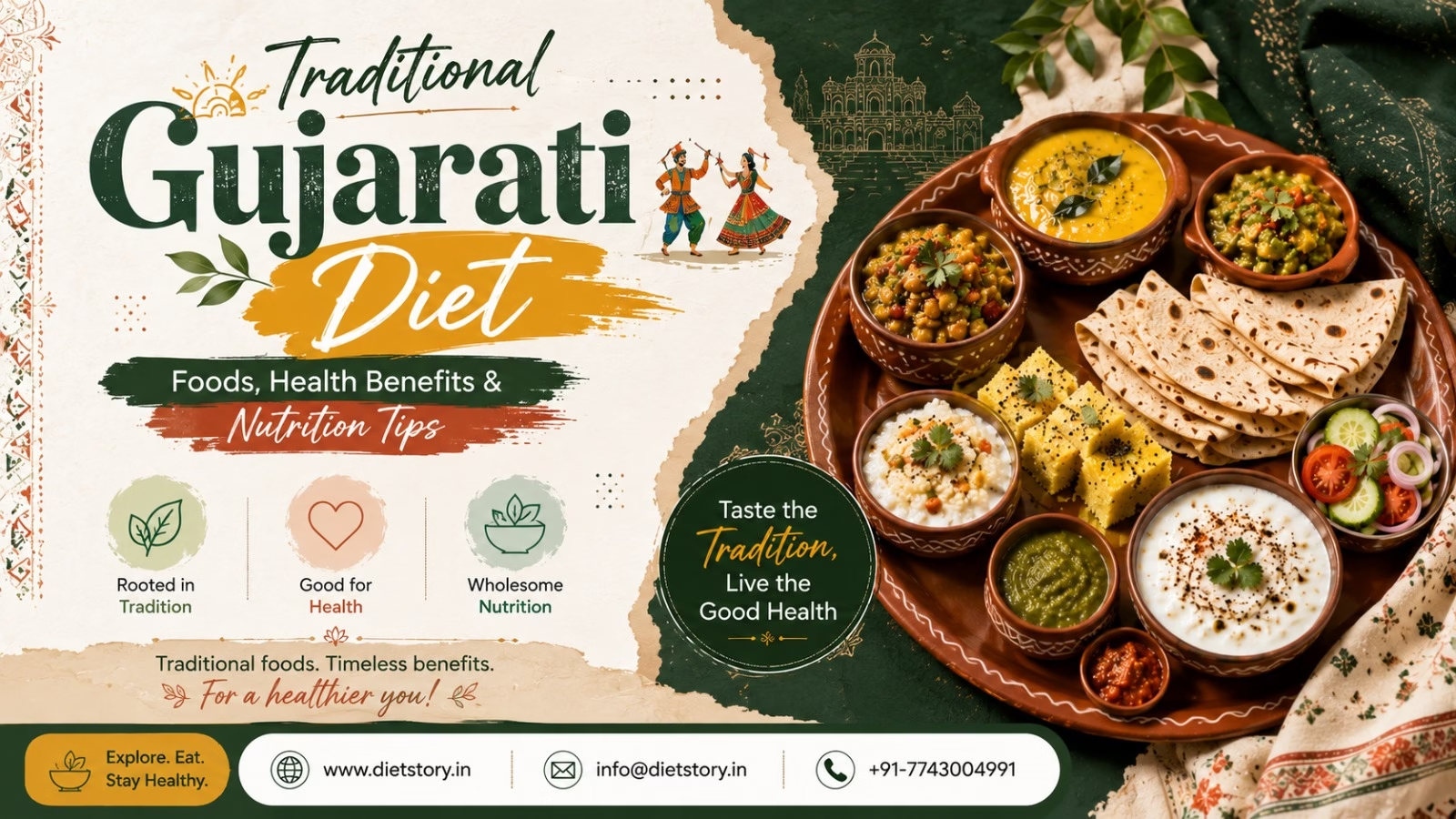
It is in the context of these cultural specifics of the region that the concept of Gujarati thali finds its origin. The thali is not only a delicious meal, but also a healthy meal as it represents an opportunity to taste sweet, spicy, tangy, and savory dishes all together. Inadvertent combination of the flavors is achieved through years of experience and attention to nutrition according to seasons.
Diet Story is a company whose focus lies in assisting our customers located in Delhi-NCR region to follow such traditional Indian diet as shown in this example in accordance with their objectives, be it weight loss, improved digestion, or just following the dietary patterns of their ancestors. The purpose of the current guide is to describe the traditional Gujarati diet: its history, key ingredients, benefits, and tips for adaptation.
A Taste of Tradition: Where the Gujarati Diet Comes From
The food habits in Gujarat can be attributed to the geography of the region as well as the people here. With a long coastline, dry interior areas and the presence of Jainism in the state, vegetarian food preparation has been more than commonplace in this area – it has become innovative too.
Due to the fact that vegetables were not available in abundance in these dry areas, the art of storing pulses, cereals and legumes has developed along with that of adding taste using jaggery, tamarind and the use of spices. This is what makes the food taste sweet-and-sour in nature with the usage of jaggery or sugar to offset the sour taste of curd, kokum or unripe mango.
In the country itself, there is a difference in diet according to different regions. The Kathiawadi foods include such foods as buttermilk, garlic, and basic spices.The Surti dishes have an inclination towards vegetables like papdi, tuvar lilva in winter season, along with their famous locho and undhiyu dishes. In the case of Kutchi dishes, the climatic conditions make them depend more on millets. Often understanding your own regional cooking style and incorporating it helps you to come up with a plan for yourself.
Core Components of the Gujarati Diet
An ideal traditional Gujarati thali operates on the principle of an entire system, where each element performs its own function:
Grains and Millets:The rotis made of bajra and jowar serve as the main staple foods, especially in winter seasons along with the wheat flour rotli, which will provide your body with the energy of complex carbohydrates.
Pulses & Lentils (Dal): Protein sources like toor dal, moong dal, and chana form the base of all the dishes prepared in mild sweet and sour gravies.
Vegetables (Shaak): Seasonal vegetables served in preparations that use mild seasoning and are either steam-cooked or stir-fried rather than fried.
Curd & Buttermilk (Chaas): A daily affair, known for their role in digestion and cooling effect as a counter to spices.
Steamed and Fermented Snacks: Dhokla, Khaman, and Khandvi are steamed snacks prepared from fermented gram or rice lentil flour dough – gut-friendly snacks way back even before fermented foods became popular.
Jaggery and Natural Sweeteners: Only limited to just a few spoons to balance out the sour and spicy tastes in food, not used as desserts.
Key Nutritional Benefits
Apart from making the food taste good, it is also nutritionally rich if done in the right way:
- High fiber intake the millets, pulses, and veggies helps digestion and keeps blood sugar regulated.
- Balanced plant protein from the dal-and-grain combination provides a fairly complete amino acid profile across the day.
- Probiotic support from daily curd, chaas, and fermented snacks like dhokla aids gut health.
- Lower saturated fat than many other regional cuisines, since steaming and light sautéing are more common than deep frying.
- Micronutrient density through the diverse use of seasonal vegetables and the inclusion of til (sesame) and groundnut that provide healthy fats, calcium, and magnesium.
But there is one thing that makes all the difference – it’s in the amount and way you prepare the food. The same thali can go from being nutritionally sound to having too much refined carbohydrates and jaggery in it depending on the amount of oil used and the sugar content as well as the ratio of the grains to vegetables on your plate versus in the bowls.
Sample Gujarati Diet Plan (One Day)
Early Morning: Hot water along with methi seeds that are soaked in water
Breakfast: Dhokla steamed with green chutney and a bowl of curd
Mid Morning: Seasonal fruit such as chikoo, guava or papaya
Lunch: Bajra rotla along with toor dal, seasonal shaak such as lauki or turai and a bowl of chaas
Evening: Roasted chana or soaked almonds along with tea
Dinner: Moong dal khichdi along with vegetables or 1-2 rotli along with a light vegetable curry
After Dinner: Add 2 pods cardamom + 1 glass warm water
This is an example of how a Gujarati diet is structured with light dinners, protein in every meal and the use of fermented and steamed food for digestion.
Key Modifications for Modern Health Goals
The traditional thali can be adapted without losing its identity:
- Cut down the amount of jaggery and sugar used in dals and shaak – the combination of tart and sweet taste needs to favor the latter ingredients like tomatoes, kokum, or green mangoes more.
- Replace deep-fried snacks such as fafda or chorafali with steamed items like dhokla or khaman on most occasions.
- Increase ratio of millets to wheat in making rotis for high fiber content and low glycemic index.
- Watch the serving sizes in rice during lunch, particularly for people who need to monitor their blood sugar levels or lose weight.
- Add a protein anchor — a slightly larger portion of dal, sprouts, or paneer — for those with higher protein needs, such as active individuals or postpartum women.
Gujarati Diet Plan for Weight Loss
For weight loss following the Gujarati style of eating, it isn’t about giving up the style; it’s about adjusting three key elements: oil, sugar, and serving sizes.
- Choose steamed or roasted preparations over fried farsan
- Fill half the plate with vegetables (shaak) before adding grains
- Use jaggery sparingly, and rely on natural souring agents for flavor balance instead
- Prioritize buttermilk over sweetened lassi
- Keep dinner lighter — khichdi or a vegetable-and-dal combination rather than rotli-heavy meals
Done this way, the diet remains satisfying and culturally familiar, which is exactly why it tends to be more sustainable long-term than a generic low-calorie plan.
Bringing It Together
One of the healthiest diets of India is the Gujarati diet provided it is made in the right manner. Fiber-rich by nature, it is a diet that involves fermented foods, balanced vegetarian protein, and makes the best use of seasonal ingredients. Nonetheless, just like every other traditional diet, the healthiness of this particular diet depends upon how well it is cooked, how many portions you consume, and what your health goals are.
If you are looking for ways to lose weight, balance out PMOS, Diabetes , fatty liver, lower cholesterol , and insulin resistance, then some changes in your traditional Gujarati diet can do wonders for you. You will be required to replace all refined foods with whole grains, have more protein, cut down on sugar and oils, and ensure that you have enough vegetables in each meal.
Here at DietStory, we have registered dietitians who design customized Indian meal plans taking into account regional food practices. Our aim is to help you lose weight and manage your lifestyle diseases effectively without eliminating your favorite traditional Gujarati dishes from your meals.
👉 Book your personalized diet consultation at Diet Story
If you’d like a personalised plan tailored to your blood reports, food preferences, and lifestyle, book a consultation with Dt. Prerna Dhingra at Diet Story, Gurugram.
📞 +91-7743004991 📧 info@dietstory.in 📍 Gurugram, Haryana
Frequently Asked Questions
1.Is the traditional diet of Gujaratis healthy for weight loss? Yes, but with some tweaking of portion sizes and cooking practices. Steaming instead of frying of farsan, higher intake of vegetables and lesser consumption of jaggery in the diet makes the traditional thali excellent for weight loss purposes.
2.Why is Gujarati food sweet? Addition of sugar and jaggery is required to offset the taste of curd, kokum, or raw mango to balance the taste and not make the food desert-like.
3.Is Gujarati cuisine healthy for diabetic patients? Yes, but with a couple of modifications. Changing rice to either bajra or jowar rotla, reducing the intake of added sugar and jaggery, and emphasizing dal and veggies rather than farsan would definitely make it healthier for diabetes patients.
4.What makes the Gujarati thali nutritionally balanced? Having grains, pulses, vegetables, and curd all show up in one meal means you’re getting fiber, plant-based protein, good bacteria, and a mix of micronutrients in a single sitting — without needing to plan for it separately.
5.Can dhokla and khaman be considered healthy snacks? Certainly. These are steam-cooked, fermented products made from gram flour with a reduced fat content as compared to their fried versions and rich in probiotics.
6.Is a diet based on Gujarati food capable of naturally balancing hormones? Properly organized Gujarati food with its fiber and healthy fats (til, groundnut), as well as fermented products, can be of great assistance in naturally balancing hormones, especially in cases of PCOS due to the role of fiber and healthy fats in the regulation of insulin and estrogen metabolism.
7.Is bajra rotla better than wheat roti?The bajra rotla is definitely more nutritious in terms of higher fiber content and lower glycemic index than the wheat roti. This makes it a great substitute for diabetes control, but wheat rotla too should not be overlooked for a balanced meal.
8.What is undhiyu, and is it healthy? Undhiyu is a dish prepared using the combination of different vegetables cooked using seasonal vegetables and legumes with some spices. Undhiyu is an inherently nutritious dish by virtue of the variety of vegetables used. However, it might have additional oil added in the preparation at restaurants.
9.How much oil do traditional Gujarati recipes contain? Traditional home-made Gujarati dishes have medium oil content, primarily for tempering (vaghar), instead of a large amount in the dish. However, restaurant-prepared meals use a little more oil, making the former the preferable choice.
10. Is Gujarati food suitable for a Jain or fully vegetarian lifestyle? Yes. Considering the heavy Jain presence in the state, it is quite natural that the cuisine consists of vegetarian, and often Jain food with easy substitutes for onion, garlic, and root vegetables.




Leave a comment