
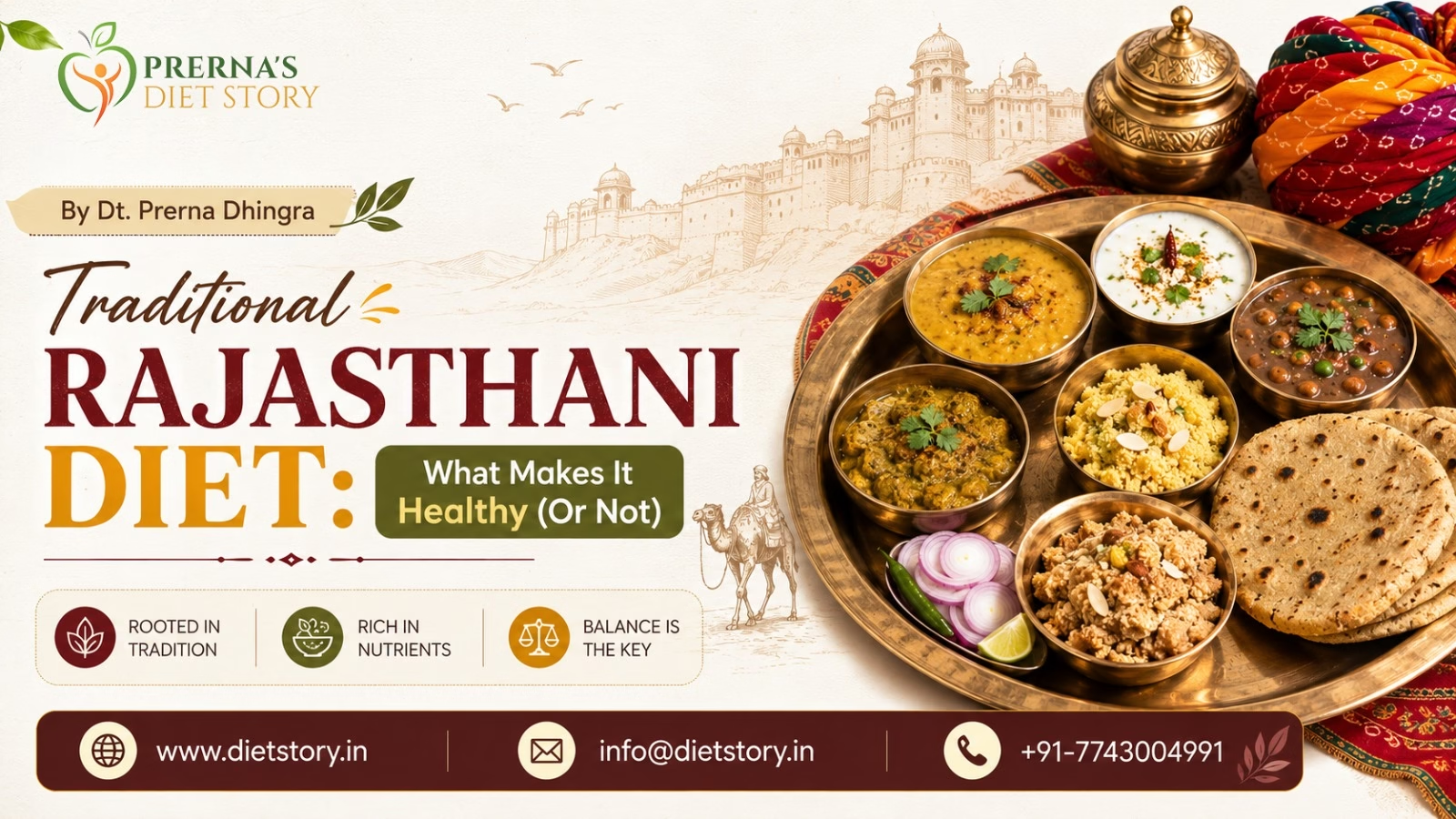
Having been brought up in a Rajasthani family, you know better than anyone else that food goes beyond consumption and becomes an integral part of your culture, tradition, and lifestyle. The Rajasthani Diet is a product of a unique environment in which the summers are too hot and dry and fresh vegetables were scarce all year round. Hence, the traditional meals of the Rajasthani people feature mostly products that could be kept for a long time, including pearl millet (bajra), jowar, dried legumes, moth beans, besan, curd, and ghee. That is why the food in Rajasthan is very nutritious and gives you lots of energy for long hours of hard work. There are plenty of such dishes that last longer; therefore, the traditional Rajasthani diet is one of the most practical diets in India.
As someone who helps people with what they eat I work with a lot of families from Delhi-NCR who’re from Rajasthan. They often ask me: “I have been eating Rajasthani food my life. Is it good for me or should I stop eating it?” The answer is not simple. Traditional Rajasthani food has some good ideas about what we should eat and some habits that we should think about again. This is because our lives have become easier compared to the past. The cuisine of Rajasthan is the way it is because of the nature of life back then.
Core Staples of the Rajasthani Diet
In the center of every Rajasthani thali, one can see the presence of basic foods that appear in every meal: bajra (pearl millet), moong and moth dal, gram flour (besan), curd, and ghee. This is no coincidence; these foods were the foods that could withstand harsh weather conditions for months without going bad, which is why they formed the base of their diet even before “eating seasonal and local” became the newest wellness craze.
What’s interesting from a nutrition standpoint is that most of these staples hold up well even today. Millets are naturally gluten-free and have a slower impact on blood sugar than refined wheat. Legumes bring in plant protein and fibre that a lot of modern diets are actually short on. The desert didn’t leave much room for waste, so almost nothing in the traditional Rajasthani pantry is nutritionally empty.
Staple Grains and Breads
It is the two grains bajra and jowar that form the staple grains and bajra roti in particular does not receive enough recognition for its nutritional value. Bajra roti contains more fibre as compared to wheat roti and provides you with the sense of satiation. Moreover, it is suitable even for those individuals who have problems with their blood sugar levels. Missi roti consists of both wheat and gram flour and has more protein content in comparison to just wheat flour roti
The situation becomes very complex when it comes to the category of fried breads such as bedmi puri or the puris that accompany kachori. These dishes are very delicious. They are supposed to be consumed from time to time on the occasion of festivals. People are not supposed to consume them daily. However, nowadays people have started consuming them on a regular basis. This is how their eating pattern becomes unbalanced The change from eating these foods to eating them every day is a big problem. Fried breads, like bedmi puri and puris are the foods that cause this problem.
The Essential Vegetarian Diet of Rajasthan
Rajasthani cuisine is overwhelmingly vegetarian, and that’s partly cultural, partly practical — meat didn’t store or travel well in desert heat without refrigeration. What filled that protein gap instead was a heavy reliance on dals, besan, curd, and paneer.
This is actually one of the more underrated strengths of the traditional Rajasthani diet. Dishes like gatte ki sabzi (gram flour dumplings in a spiced curd gravy) and panchmel dal (a mix of five lentils) deliver a solid protein and fibre combination in a single dish — something a lot of modern vegetarian diets struggle to replicate outside of Rajasthan.
The one gap worth naming honestly: fresh vegetables historically played a smaller role here than in most other regional Indian diets, simply because they weren’t as available. That’s no longer true today — fresh produce is accessible year-round even in Rajasthan — so it’s one of the easiest and most impactful additions to make to an otherwise well-rounded traditional plate.
Must-Try Healthy Dishes
If you’re trying to eat traditionally while keeping things balanced, a few dishes consistently come out on top:
- Ker Sangri is a food that is made from desert berries and beans that are dried. This food is very good for people who live in areas. When you add water to Ker Sangri and cook it it becomes very healthy to eat.
- Gatte ki Sabzi is a dish that is made from dumplings and a special sauce made from curd. The dumplings are made from gram flour. They are cooked in the sauce. This food is very good because it has protein and it is also very tasty. You do not need to fry the dumplings in a lot of oil to make them taste good.
- Panchmel Dal is a dish that is made from five types of lentils. When you cook all these lentils together they become very healthy to eat. They have good things in them than if you just cook one type of lentil.
- Bajra Roti with Lehsun Chutney is a healthy food. The roti is made from a type of flour that has a lot of fibre in it. The chutney is made from garlic. It is very tasty. When you eat Bajra Roti with Lehsun Chutney you can make a balanced meal.
- Chaas or buttermilk is something that people drink every day. It is very good for you because it helps to keep your body cool and it also has helpers in it that keep your body healthy. Chaas is especially good, for people who live in places because it helps to keep them cool and healthy.
Key Ingredients Behind the Cuisine
A few ingredients show up again and again and are worth understanding individually:
- ghee – used generously, traditionally justified by the high calorie needs of physically demanding desert life.
- Besan (gram flour) – the backbone of gatte, kadhi, and several snacks; a genuinely good plant protein source.
- Dried lentils and beans (ker, sangri, moth) – built for long storage, and nutritionally still relevant today.
- Curd and buttermilk – used both in cooking and as a daily drink, offering probiotics and helping balance the richness of ghee-heavy dishes.
- Red chillies and asafoetida (hing) – used liberally, both for flavour and for their traditional digestive benefits.
A Note on Rajput Cuisine
Rajasthani food is really good. Rajput cuisine is special in its own way. It has been shaped by the food that people used to eat in courts and from hunting. People know about Laal maas and safed maas they are very popular. Laal maas is a mutton curry. They also used to eat game meats like deer when they had feasts. Most of the time Rajasthani people eat food because it is easy to make. But Rajput people have a way of cooking non-vegetarian food it is spicier and has more flavor. You can usually find this kind of food on occasions or in old restaurants that serve traditional food not, in everyday meals.
Popular Snacks and Sweets
When we talk about food from Rajasthan we have to talk about the snacks and sweets. This is the part where we need to be careful about how much we eat. Things like kachori and pyaaz kachori and mirchi vada are really well known.. A long time ago people did not eat these every day. They were food that people took with them when they traveled. They only had them sometimes. It is the same with sweets like churma and ghevar and malpua. These sweets are really tasty. They have a lot of ghee and sugar in them. So it is better to have them not every day. Rajasthan food is great. Snacks and sweets, like kachori and churma are a big part of it. We just need to remember to have them in moderation.
How to Eat Traditional Rajasthani Food the Healthy Way
- Keep the base, adjust the fat. Bajra roti, dal, and kadhi are solid choices as they are — just watch the ghee quantity rather than cutting the dish out entirely.
- Make fried snacks a weekly treat, not a daily one. Kachori and pakoda taste better anyway when they’re not an everyday habit.
- Add a fresh vegetable to every meal. It’s the single easiest upgrade to a traditional Rajasthani thali.
- Keep the chaas, watch the sweets. Buttermilk is a genuine win to build meals around; treat churma and ghevar as occasional.
- Portion the ghee rather than eliminating it. The issue is usually quantity relative to today’s activity levels, not the ingredient itself.
The Bottom Line
Traditional Rajasthani food isn’t something to be wary of — it’s a diet that was carefully shaped by its climate and lifestyle, with more nutritional intelligence built in than it usually gets credit for. The adjustments worth making today are mostly about portion size and frequency, not about giving up the food you grew up with.
Frequently Asked Questions
- Is the diet of Rajasthan healthy for its people? Mostly yes. This is because the diet is made up of fibre-filled millets, high-protein legumes, and probiotics-filled curds and buttermilk. The only changes required in the modern day are in the consumption of ghee, fried food, and sweets.
- What are the core staples of a traditional Rajasthani diet? Rajasthani meals are really simple. They usually have Bajra, moong dal and moth dal. You will also find besan, curd and ghee in most of these meals. Sometimes people add vegetables like ker and sangri to the Bajra moong dal and moth dal. These things like Bajra, moong dal and moth dal are what Rajasthani meals are, about.
- Is dal baati churma healthy?When we eat dal and baati in amounts yes they are good for us. The dal and baati give us protein and fibre.. The ghee and sugar in the churma are not so good. So we need to be careful, with the churma. We should eat it in amounts. The dal and baati are fine. The churma needs to be eaten in sensible portions.
- Are traditional foods of Rajasthan suitable for people with diabetes? Traditional foods such as bajra roti, moong dal, and gatte ki sabzi can be enjoyed by diabetics owing to their high fiber and low glycemic index.
- Which are some of the healthiest traditional Rajasthani dishes that should be eaten on a regular basis? Bajra roti, panchmel dal, gatte ki sabzi, ker sangri, and chaas are some of the nutritious everyday dishes.
- Why is ghee used in large quantities in Rajasthani cuisine? Traditionally, due to the hot, dry climate and physical exertion, higher calories were needed, and since ghee was a source of energy which did not get spoiled easily, it was consumed in large quantities.
Get Personalized Guidance
If you want a diet plan that’s just for you to lose weight or balance your hormones naturally Diet Story is a good place to go. They give you a diet plan that works with the food you are used to eating, not against it. Ms. Prerna Dhingra helps you take care of your health in a way with meal plans that are tailored to your needs and that you can really follow. It does not matter if you like the food from Rajasthan or if you just want a plan that fits your life Diet Story can help you. You can talk to them online from anywhere in India. You can visit them in person, in Delhi-NCR including Gurgaon, Delhi, Noida and Faridabad. Diet Story provides these services to help you with your Diet Story.
Book a Consultation with Diet Story →
If you’d like a personalised plan tailored to your blood reports, food preferences, and lifestyle, book a consultation with Dt. Prerna Dhingra at Diet Story, Gurugram.
📞 +91-7743004991 📧 info@dietstory.in 📍 Gurugram, Haryana



Leave a comment